

Franchise Assembly’s Most Fascinating Franchise Marketers Of 2026
Franchise Assembly was founded on the belief that meaningful professional development should be the standard for executive leaders across the franchise industry. Over the past several years, we have pursued that mission through conferences, memorable events, carefully curated mastermind sessions, original articles, and our podcast.
But developing leaders also means recognizing the people already challenging conventions, strengthening brands, and moving franchising forward. Through features such as our “Trailblazers” and “Ones to Watch,” we have celebrated accomplished professionals while looking beyond their titles to understand what they have built, how they think, and why their contributions matter.
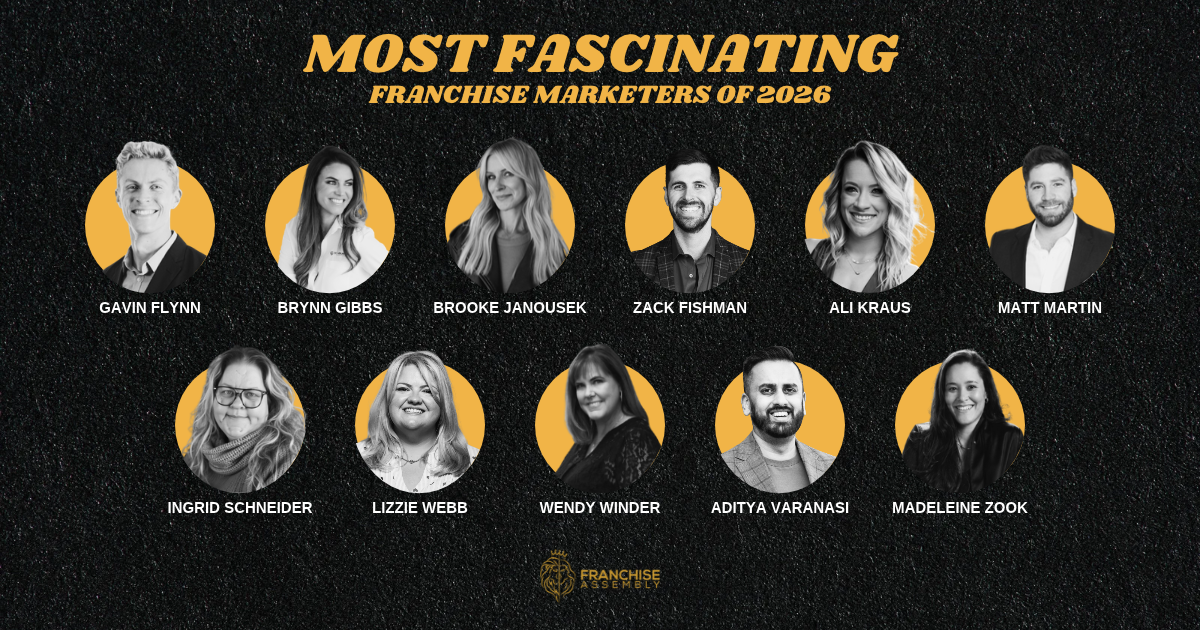
That brings us to our latest series: the Most Fascinating People in Franchise Marketing.
What makes someone fascinating? It is not a prominent title, an impressive campaign, or a polished LinkedIn profile. It is the unexpected route that brought them here, the experiences that shaped how they lead, and the interests, relationships, and convictions that reveal who they are beyond the work.
The people on this list began their journeys in classrooms, engineering labs, political campaigns, nonprofit organizations, restaurants, dairy farms, basketball courts and even waterbed stores. They are musicians, athletes, coaches, parents, mentors, community builders and entrepreneurs. Their interests range from Formula 1 and British reality television to Halloween parties, rhinestoning and highly elaborate hermit crab habitats.
To uncover those stories, we asked each marketer a list of wide-ranging questions. We wanted to know how they found franchising, what shaped their perspective, which challenges changed them, where they believe the industry is heading, and what occupies their attention when they are not working.
Their answers confirmed what we already suspected. Behind every accomplished franchise marketer is a layered individual with an unexpected story, a distinct point of view, and something meaningful to teach the rest of us.
Our selection process was intentionally human and unapologetically unscientific. There was no algorithm, formal scorecard, or attempt to rank one fascinating person above another. Instead, we assembled our Top 10 + 1: eleven franchise marketers whose work initially captured our attention and whose stories made us want to know more.
Great marketing may have earned them our attention, but who they are beyond the job title earned them a place on this list.
Meet Franchise Assembly’s Most Fascinating People in Franchise Marketing (in no particular order):
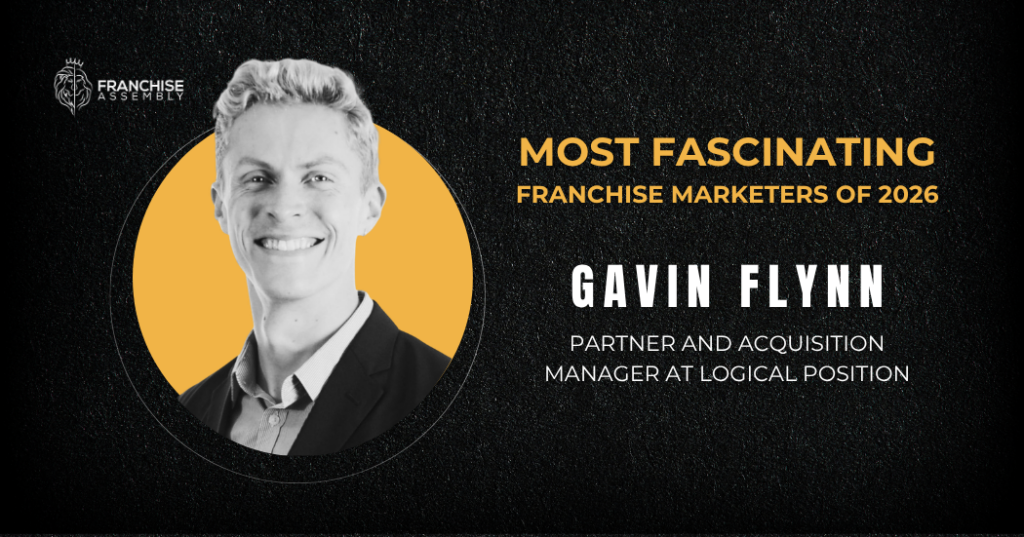
Gavin Flynn
Gavin Flynn has built his career around two strengths: developing relationships and making complicated ideas easier to understand.
Gavin joined Logical Position nine years ago in a traditional business development role. In 2021, he moved into partnerships and franchising, opening the door to larger enterprise projects and deeper connections across the franchise industry. The transition was a natural fit. Gavin enjoys the relationship dynamics of multi-location networks and the challenge of translating complex marketing concepts into language that franchisees, franchisors, and partners can put into action.
Before entering digital marketing, Gavin served with AmeriCorps in a volunteer management role, eventually becoming a statewide leader in California. He worked with people stationed at nonprofit organizations across the state, bringing remote teams together for training, community building and conversations about their shared experiences.
Looking back, Gavin sees a clear connection between that work and his career today. Both require an understanding of broad networks filled with people in different locations, serving different communities and bringing different perspectives to the same larger mission.
His advice for franchise marketers is surprisingly straightforward: get organized. Clean campaign structures, consistent naming conventions, and reliable reporting are essential when multiple levels of a franchise network need access to accurate information. Creative ideas may earn more attention, but solid organization is what lets those ideas scale.
One of Gavin’s most rewarding professional challenges has been helping grow Logical Position’s Partner Program. The company works with an extensive network of vendors and referral partners, each with its own priorities, goals, and challenges. Managing those relationships provides him with a continuous stream of new problems to solve, which is exactly what keeps the work interesting.
Gavin believes the way customers search for services is changing quickly. Over the next several years, franchise marketers will need to expand their focus beyond traditional search traffic and consider how brands appear in ChatGPT, AI Overviews, and other AI-powered discovery tools. Visibility within those environments will become increasingly important for franchise systems.
That shift also makes social proof and customer reviews more valuable. AI search experiences draw from third-party sources when determining which brands to surface, so a strong online reputation can directly influence discoverability. Gavin summarizes the opportunity in one line: “Trust in the brand comes before trust in your ad.”
Outside work, Gavin is rarely sitting still. He has been running competitively since 2008 and is currently training for a half marathon, often logging miles in Portland’s Forest Park. Nearly two decades of running have made detailed daily and weekly planning second nature.
He has also practiced jiu-jitsu for nine years and remains a blue belt, a progression he cheerfully describes as “taking the scenic route.” When he is not running or training, he is usually found walking his dog with his wife, browsing a favorite local record store, or drinking an espresso.
Meditation has had the greatest influence on how Gavin thinks. It entered his life at the right moment and fundamentally changed the way his mind operates. His practice may become more or less intensive at different times, but it remains a skill he can return to whenever he needs it.
Asked what he hopes to be known for in ten years, Gavin does not mention a title, campaign, or business accomplishment. He wants to be a good husband, dog dad, friend, family member, and contributor to his community. For someone whose career has always centered on building meaningful connections, that answer feels entirely consistent.
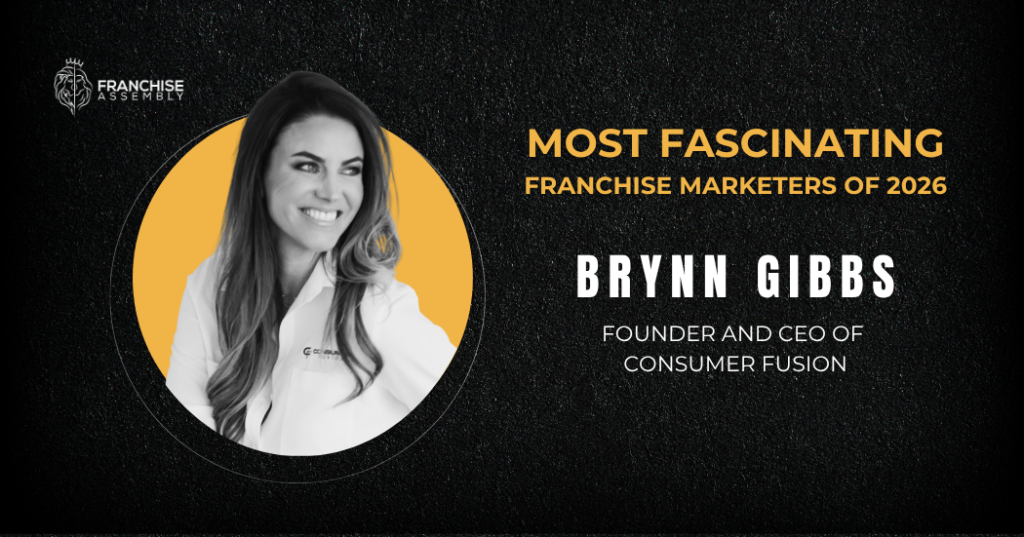
Brynn Gibbs
Brynn Gibbs is the Founder and CEO of Consumer Fusion, an AI-powered reputation management platform that helps multi-location brands manage reviews, directory listings, social media, and search visibility. Over the past 13 years, she has built the company around a straightforward goal: help every local business get found, earn trust, and turn that trust into revenue.
Brynn is an ambitious entrepreneur who thrives on anticipating what comes next. Her work sits at the intersection of technology, consumer behavior, and the very human process of building trust. That perspective has helped Consumer Fusion evolve alongside the ways people search for and choose businesses.
Interestingly, the company’s entry into franchising did not begin with a carefully plotted expansion strategy. It began with four words: “Franchising needs you.”
In 2019, Liberty Harper Bernal, former franchisor of Liberty Fitness, learned about Consumer Fusion and immediately recognized its potential for the industry. She introduced Brynn to Lane Fisher, and the Consumer Fusion team attended UnConference the following month. From there, the company went all in.
Before franchising, Consumer Fusion primarily served dental service organizations and small businesses nationwide. The multi-location needs of dental groups closely mirrored those of franchise systems, and the experience taught Brynn an important lesson. Whether a company has ten locations or one thousand, every local business still needs to be found, earn trust, and convert that trust into revenue.
Today, franchising is one of Consumer Fusion’s largest and most meaningful areas of focus. Brynn is equally enthusiastic about the people, relationships, and sense of community she has found within the industry.
Her advice for anyone hoping to build a career in franchising is to show up and develop genuine relationships. Trust cannot be rushed or manufactured. Brynn encourages people to attend industry events, get involved, give back, and listen more than they sell. Bring value, follow through on your promises, and become part of the community. She believes opportunities will follow.
The most interesting challenge of Brynn’s career has been continually evolving Consumer Fusion as search behavior and purchasing decisions change. When she started the company, online reputation management largely meant monitoring Google reviews and keeping business information accurate. Today, consumers discover brands through search engines, social platforms, review sites, and AI tools, often moving between several of them before making a decision.
Brynn is constantly asking where consumers will go next and how Consumer Fusion can help its clients appear there, earn trust, and turn that visibility into growth. Staying ahead of that change is difficult, but it is also the part of the work she enjoys most.
Over the next several years, Brynn expects AI to transform both consumer search and the daily work of marketers. Teams will automate more, move faster, and gain access to better data. Paradoxically, she believes the human side of marketing will become even more important. Authentic content, genuine customer experiences and strong brand trust will matter more as audiences encounter greater volumes of AI-generated material.
She also expects marketers to become less impressed by vanity metrics such as lead volume and cost per lead. The more meaningful questions are whether those leads converted and whether the marketing produced revenue. The tools will keep changing, but Brynn’s fundamentals remain the same: get found, be trusted, and turn that trust into growth.
One of the most underused opportunities she sees in franchise marketing is local social media. Consumers want to connect with real people and businesses in their communities, not see the same polished corporate post distributed across hundreds of locations. Brynn believes franchisees should be given the tools to share real employees, customers, community involvement, and local stories while still protecting the brand. As AI makes generic content easier to produce, authentic local content will only become more valuable.
Behind Brynn’s accomplishments is a level of self-imposed pressure that may not be obvious from her LinkedIn profile. Surrounded by intelligent and successful people, she sometimes feels that she should be growing faster, achieving more or pursuing something bigger. Social media highlights awards, speaking opportunities, and business growth, but it rarely reveals the self-doubt behind those moments. Brynn is proud of what she has built and is learning to stop moving the goalpost long enough to appreciate it.
The experience of building a company for 13 years has shaped her more than any class or business book. Successes built her confidence, but mistakes and difficult seasons produced the greatest growth. She has also intentionally surrounded herself with people who challenge her thinking. She asks questions, listens carefully, and is willing to change her mind when new information calls for it.
When Brynn needs motivation, she listens to Gary Vaynerchuk, whose direct approach encourages her to show up authentically and worry less about other people’s opinions. She is also listening to Emma Grede’s Start With Yourself, connecting with its perspective on ambition, ownership, and building something meaningful. Asked what else she is currently obsessed with, Brynn offered the shortest answer in the survey: “Mark Spencer!” For those of you who don’t know, Mark is her devoted husband and Chief Growth Officer at Consumer Fusion. He’s not only her work husband, he’s her real husband!
Brynn’s definition of long-term success extends far beyond Consumer Fusion. She wants colleagues to remember that she challenged them, believed in them, and helped them improve. She hopes her three children will remember a mother who worked hard and pursued big goals while still being present for the moments that mattered.
Having turned 40 this year, Brynn is increasingly focused on building both an extraordinary career and an extraordinary life. She believes you can be wildly ambitious while creating a life you don’t constantly need to escape. Her philosophy is simple: chase the big things, take the trip, show up for your family, bet on yourself, and enjoy the experience along the way.
In ten years, Brynn hopes to be known as someone who built big things without losing sight of what mattered most. Not a successful career at the expense of a meaningful life, but both together.
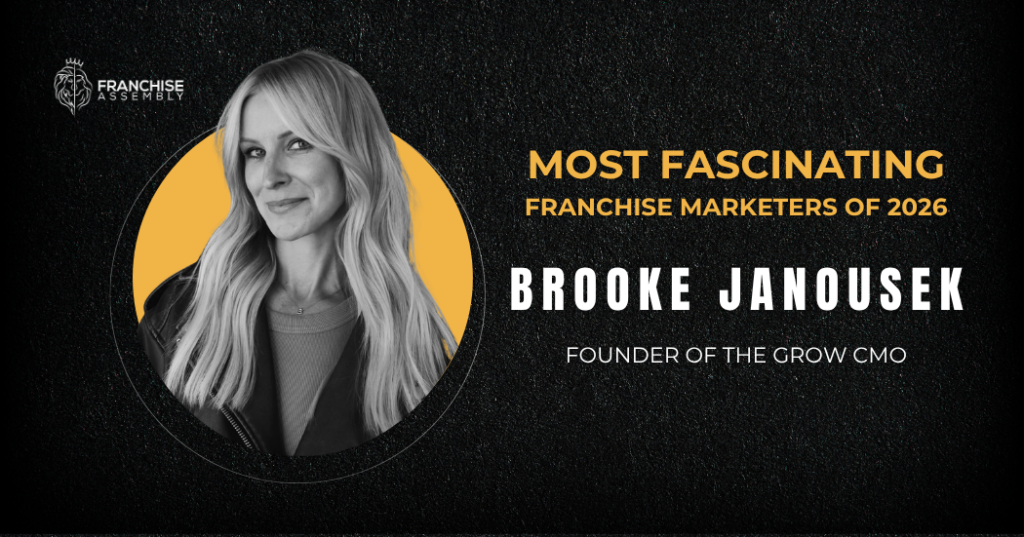
Brooke Janousek
Brooke Janousek is the founder of The Grow CMO, a fractional CMO consultancy she launched in 2022. Depending on the day and the brand, she may serve as a fractional CMO or step fully into the role. In either case, her work centers on helping companies bring greater clarity, alignment, and scalability to their marketing.
Brooke’s path into franchising began in a garage, quite literally. As Vice President of Marketing and Creative at Supportworks in Omaha, Nebraska, she led a team of nearly 20 marketers, designers, copywriters, project managers, and event planners. Together, they provided marketing, sales, accounting, and operational support to a network of more than 150 dealers.
When Supportworks decided to diversify, outside research pointed the company toward garage floor coatings. Rather than using its existing dealer and distributor model, the team chose to build a franchise concept. Brooke was involved from the ground floor, helping develop the name, brand identity, go-to-market strategy, and the marketing section of the operations manual. Hello Garage® officially launched in May 2020, giving Brooke what she describes as a wild introduction to franchising.
Launching the brand from scratch remains the most interesting challenge of her career. It required her to move beyond promoting an established company and build the systems, tools, and identity that would let a new concept scale across independently owned locations.
Long before Hello Garage, Brooke worked at advertising agencies and later transitioned to working directly with brands. One formative experience placed her inside Disney’s in-house advertising agency four days a week for nine weeks. She still draws on the lessons she learned there about building a brand and turning it into a consistent experience across every customer interaction.
Her advice to franchise marketers reflects the central tension of the work: you have two audiences to serve, the franchisor and the franchisee. Keeping both groups aligned requires constant balance. Brooke believes the most effective marketers bring equal measures of empathy and data to the table.
From where Brooke sits, AI has already transformed franchise marketing. Franchisees once approached her because their businesses were not appearing on the first page of Google. Now they are concerned about whether their brands appear in ChatGPT or Claude. At the same time, many are using AI to produce their own advertisements and content without recognizing when the results are inaccurate, inconsistent or out of step with the brand.
Brooke sees enormous value in the technology. AI can help small teams move faster, create more resources and give franchisees capabilities that previously required significantly more time and money. It has also produced more noise and placed new demands on marketing teams, which must now govern how dozens or hundreds of locations use it.
Over the next several years, Brooke expects franchise marketing to focus less on producing more content and more on building the systems that help people use AI effectively. Brands will need clear governance, stronger creative standards, and approved tools that allow franchisees to work quickly without weakening the brand.
She sees one particularly promising opportunity in AI agents embedded on brand websites. These tools can interact directly with consumers and gather insights at scale, giving marketers valuable information to improve content, inform product decisions and create a better user experience.
Brooke’s interests extend well beyond marketing. She is deeply interested in spirituality, including numerology, astrology, and quantum physics. She identifies her experience with the Hoffman Process as the single greatest influence on how she thinks, both personally and professionally.
She has also rediscovered the love of reading that began during childhood. Over the past two years, fiction has given her an escape while making her laugh, cry, and see the world differently. She rarely watches television, with one major exception: the Kansas City Chiefs.
For lighter listening, Brooke turns to the New Heights podcast, which reliably brings some joy to her day. Her other favorite subjects include Taylor Swift and her dog, Kip, so there is no shortage of conversation starters if you meet her at an industry event.
In ten years, Brooke hopes to be known for two qualities: creativity and resilience. Both are already visible in a career that has moved from agency work and Disney to building a franchise brand from scratch, advising companies as a CMO and helping franchise systems navigate one of the most disruptive periods marketing has experienced.
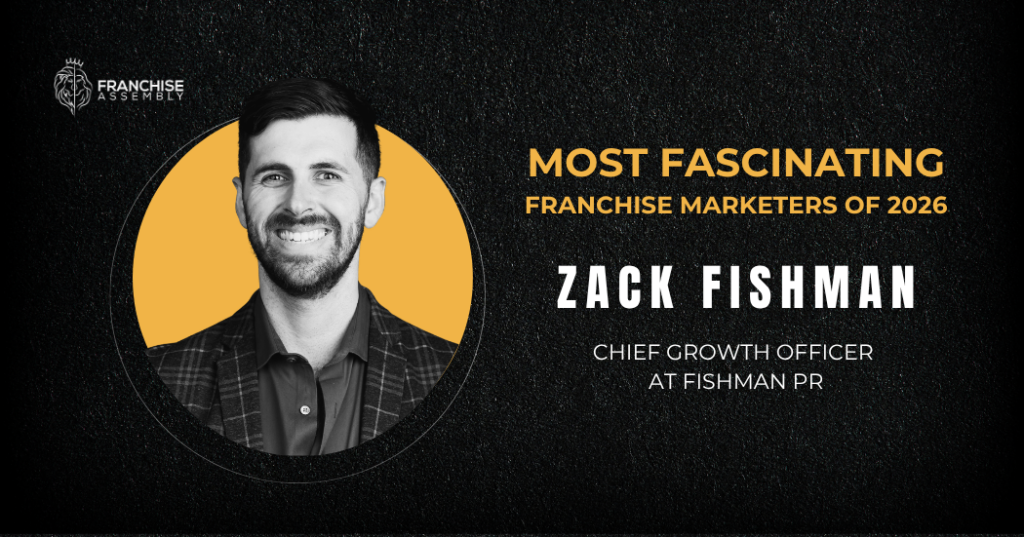
Zack Fishman
Zack Fishman is Chief Growth Officer at Fishman PR, the family firm that has ranked among franchising’s leading public relations agencies for decades. His path into the industry began early. Very early. Zack attended his first IFA convention in Palm Springs in 1993, the same year he was born. As he puts it, he has never known a life without franchising.
That lifelong exposure has given Zack a clear perspective on what it takes to succeed in franchise marketing. His advice to those entering the field is to understand both B2B and B2C marketing. Many franchise organizations do not have separate teams dedicated to each audience, so marketers who can speak to prospective franchisees while also reaching consumers have a meaningful advantage.
The most memorable idea he has helped bring to life was the Modrn Business bus. In Zack’s words, “Who the hell is dumb enough to do that not once, but twice?” The answer, apparently, is Zack and his team. It is the kind of ambitious, unconventional thinking that also shapes his view of the industry’s most underrated opportunity. Brands cannot afford to sit back and wait for candidates to find them. They need to be proactive, take smart risks, and make themselves impossible to overlook. As Zack says, “Franchise success favors the bold.”
From where he sits, franchise marketing is entering a period of significant change. Potential government intervention in the broker space and disruption across paid media are creating uncertainty. At the same time, the ways people discover brands are multiplying. Search is expanding beyond traditional engines to include large language models and emerging franchise platforms such as Franzy and WeFranch. The brands that adapt their discovery strategies now will be best positioned for what comes next.
Outside of work, Zack’s interests are as varied as his browser history. He keeps up with films on Letterboxd, tracks restaurants on Beli, supports Arsenal and the Chicago Bears, plays padel and consumes a steady stream of British television. His wife also makes the list of current obsessions, naturally. One detail people may not know is that Zack is almost entirely deaf in his right ear. If he does not respond when someone calls his name, he promises he is not ignoring them.
Zack credits his grandfather as one of the greatest influences on his life. Looking ahead, the legacy he hopes to build is just as personal. In ten years, he wants to be known as a role model for his staff and his future children. And although Zack describes himself as an oversharer whose life is already something of an open book, there is clearly still plenty worth discovering.
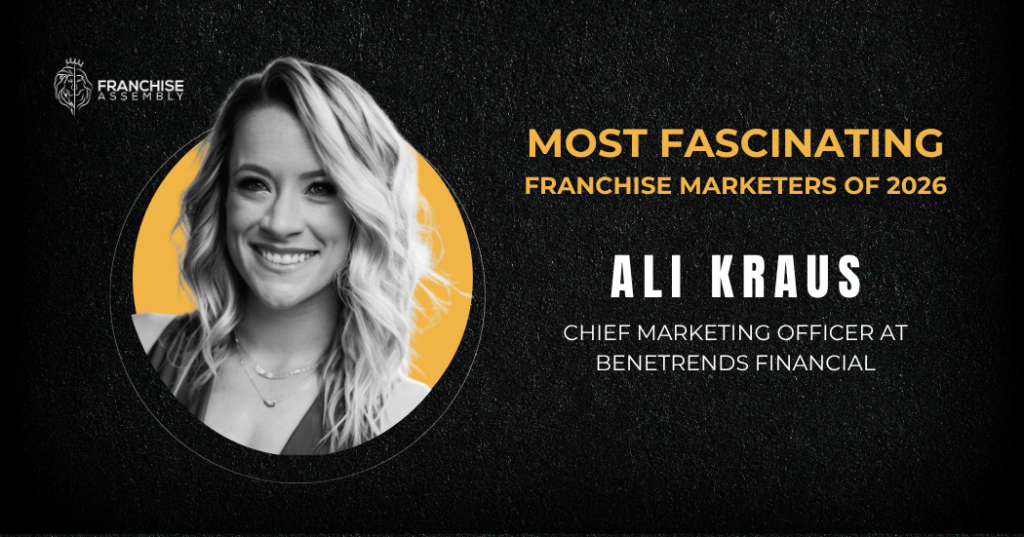
Ali Kraus
Ali Kraus is Chief Marketing Officer at Benetrends Financial, one of the franchise industry’s pioneering funding organizations. She is also a Certified Franchise Executive and Chair of the International Franchise Association’s Women’s Franchise Committee, where she plays an active role in supporting, connecting, and creating opportunities for women throughout the industry.
Ali is a creative marketer and a natural connector, but her first career had nothing to do with marketing or franchising. Before entering the business world, she spent seven years as a special education teacher, primarily working with students with autism in Baltimore.
At 21, Ali was already presenting information and data to families, administrators, advocates and attorneys, many of whom were considerably more experienced than she was. At the time, she was simply doing her job. Looking back, she recognizes how much those experiences taught her about communicating clearly, reading a room, advocating for what she believed was right and supporting her position with evidence. They also gave her the confidence to use her voice at the table, a skill that continues to influence how she leads today.
Ali’s introduction to franchising came when she joined Celebree Schools as the childcare company was preparing to franchise. She became part of the marketing team during a pivotal period that included rebranding the company, launching its franchise opportunity and beginning to grow the system. She had a front-row seat as an established corporate organization transformed into a franchise brand, and she has been hooked on the industry ever since.
Her advice to other franchise marketers is to resist the pressure to become a perfectly polished professional. Ali once worried that sharing her life as a mother, her hobbies and her playful personality might make people take her less seriously. She ultimately discovered the opposite. Being honest, transparent and human created stronger connections than hiding behind a title ever did.
That lesson feels especially important to Ali as a woman who wants to support other women in the industry. She believes there is room for seriousness and fun, and that showing the real person behind the role can help others feel more comfortable doing the same.
Another formative moment came when Ali moved from the franchisor side of the business to the supplier community. She saw how different the experience could be for suppliers and recognized an opportunity to help them become more visible and connected. She helped create an event that showcased suppliers and developed a small community where participants could collaborate, cross-refer and support one another. For Ali, it was about more than a single event. It was an opportunity to give suppliers a stronger voice and a greater sense of belonging within franchising.
That commitment to community also extends to her leadership as Chair of the IFA Women’s Franchise Committee. The role reflects what already comes naturally to Ali: bringing people together, creating opportunities and helping women throughout franchising feel supported, visible and confident using their voices.
Asked where franchise marketing is heading, Ali is wary of making confident predictions. Her reasoning is best explained through what she calls her “corduroy pants theory.” Several years ago, corduroy pants unexpectedly returned to fashion at the same time she became convinced that direct mail would make a comeback. Consumers were so overwhelmed by digital messaging that receiving something physical had started to feel distinctive again.
Since then, Ali has advertised on Reddit, used LinkedIn in ways she never anticipated and begun exploring advertising through ChatGPT. None of those channels appeared on her marketing bingo card a few years earlier, which is precisely her point. The marketers who stay curious, test unfamiliar ideas and remain willing to fail will be the ones who move ahead. Ali would rather try something and learn that it does not work than miss the opportunity because she never tried.
For all the attention given to AI, automation and lead generation, Ali believes the most underrated opportunity in franchise marketing is still people. Employees, franchisees, customers and leadership teams can be a brand’s most persuasive advocates. Giving them a voice and sharing real personalities and experiences creates a level of trust that polished advertising cannot always match.
Many of Ali’s leadership skills were developed outside the marketing department. She has danced since she was three and still coaches professional cheerleading. Coaching taught her how to motivate different personalities, deliver direct feedback, establish trust and hold people accountable. It also taught her to recognize that different people need different forms of support to perform at their best.
Ali’s life outside work is what she affectionately calls organized chaos. Rhinestoning became such a serious hobby that she launched Brand & Bling, her own side business. She also co-founded a nonprofit that collects stuffed animals for local fire and emergency medical services, leads her daughter’s Girl Scout troop and shares her home with a dog, a cat and a fish.
She also has a difficult time saying no, although experience has taught her to understand her capacity. Ali genuinely enjoys being busy, involved and surrounded by people. The fact that she rarely leaves a trade show with her voice intact offers a fairly accurate summary of her approach to industry events.
Asked about her current obsession, Ali skipped the expected business answer and chose bagels and soft pretzels. Authenticity, after all, was part of the assignment.
One idea that has taken on new meaning for Ali comes from her childhood favorite, The Lorax: “Unless someone like you cares a whole awful lot, nothing is going to get better.” Following a year of significant personal change, she has come to see the line as a reminder to advocate for herself, her daughter, her career and the things she believes deserve action.
During quieter moments, Ali is working her way through Yellowstone and finally understands the hype. She is also reading Tinx’s The Shift: Change Your Perspective, Not Yourself, a gift sent by her best friend from Seattle. Its focus on self-worth, relationships and changing your outlook without changing who you are feels particularly relevant to this chapter of her life.
In ten years, Ali hopes to be known as someone who helped people find both their place and their people. She wants to create opportunities for others, especially women in franchising, and be remembered as someone who could be trusted to show up, offer support, and open a door when it mattered.
The common thread through Ali’s teaching, coaching, marketing and community work is simple: she genuinely loves people. She wants to connect them, encourage them, make them laugh and leave every room a little better than she found it.
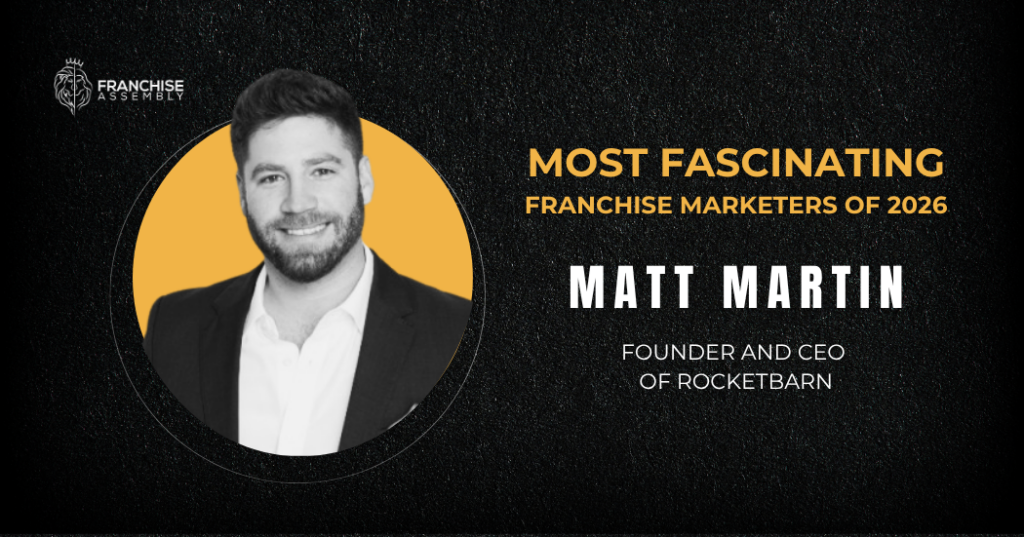
Matt Martin
At first glance, Matt Martin looks every bit the polished agency executive. His story, however, includes a rural dairy farm, a cabinet shop, a move from Canada to Nashville, and a Top 40 country song. Clearly, there is more happening behind the corporate headshot.
Matt is the founder and CEO of Rocketbarn, a digital marketing agency built exclusively for the franchise industry. He started the business in his twenties with a vision for using the scale of larger business networks to make effective digital marketing more accessible and affordable for local operators. At the time, he did not yet realize that the model he was imagining already had a name: franchising.
His introduction to the industry came through Jason Reis, then a local multi-unit franchise owner who became one of Rocketbarn’s early clients. Jason believed in the agency’s work and introduced Matt and his team to PuroClean Canada’s corporate leadership and other franchisees in the system. Jason later became president of the brand, while Rocketbarn’s relationship with PuroClean expanded into the United States. What began as a single local engagement opened the door to an entirely new direction for Matt’s business.
Before Rocketbarn, Matt worked in small business sales and marketing, experiences that gave him an appreciation for the customer service, persistence and grit required to build a business. Growing up on a dairy farm likely helped with the grit part too. He also spent a couple of years building cabinets, a skill that may not shape Rocketbarn’s strategy today but has apparently made him useful whenever the office furniture needs assembling.
Then there is his other career. After growing up in Canada, Matt eventually moved to Nashville, bringing both his agency and his music with him. Although entrepreneurship kept him from pursuing a life of touring and regular performances, he released music on major streaming platforms, received country radio airplay, and landed a Top 40 song in Canada. You can listen to his latest music here.
One of the projects currently energizing Matt is Rocketbarn’s work with Epic Septic, a franchise brand whose name, business model and memorable identity immediately caught his attention. Rocketbarn is helping the company expand across the United States, with new locations planned through 2027. Matt is excited to help the brand make a “big splash,” and in this particular case, we will allow the pun.
His advice for anyone entering franchise marketing is to “hold onto your hat.” Serving franchisees, franchisors, or both requires a clear understanding of the agreements, responsibilities, and relationships that connect them. The work can be complex, but Matt finds it especially meaningful because many franchisees have invested their life savings in the hope of creating a better future and a lasting legacy for their families.
Matt believes AI will continue to reshape digital marketing, giving business owners more tools and more opportunities to handle elements of marketing themselves. Still, he is betting on the lasting value of a great human partner. Business owners remain busy, the technology still needs strategy and guardrails, and effective marketing requires more than access to the latest platform. For Matt, the opportunity lies in combining the efficiency of AI with the judgment, accountability, and personal connection that only people can provide.
In ten years, Matt hopes Rocketbarn will be known not only for helping its clients succeed, but also for creating meaningful careers for the people who helped build it. On a personal level, he wants to inspire others to pursue their ambitions, take chances and invest in themselves. His music, work and adventures all reflect the same philosophy: “I hope people catch a glimpse of someone who takes life seriously enough to not just let it pass by, but also lighthearted enough to not take it too seriously.”
Matt also believes life should include plenty of laughter, especially at your own expense. If you are willing to put yourself out there, you will occasionally fail or look a little foolish. According to Matt, that is not something to fear. It is simply part of building a life worth taking seriously.
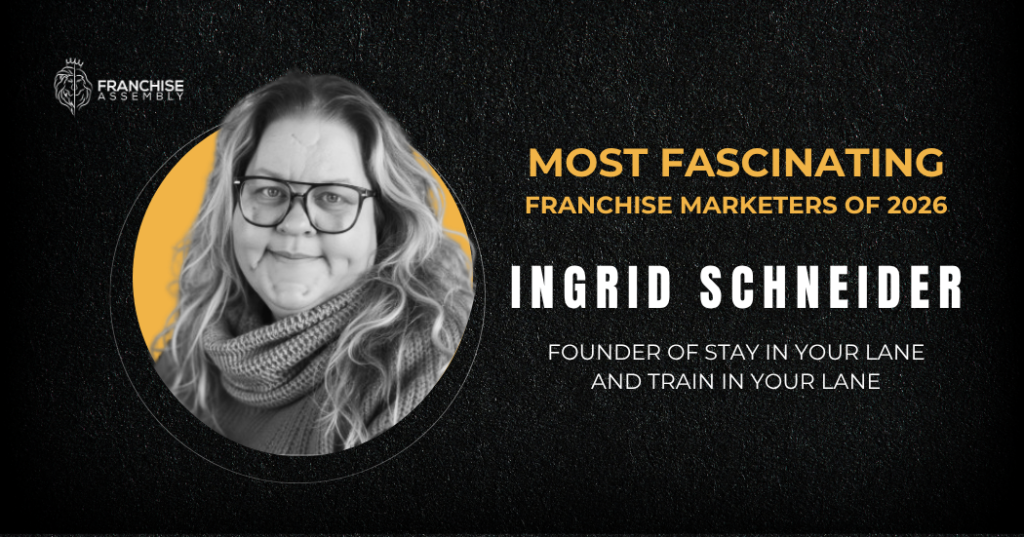
Ingrid Schneider
Before Ingrid Schneider built franchise brands, she sold waterbeds from the backs of trucks while dressed as a clown.
Her father, known locally as Water Bed Fred, owned two stores and staged parking lot sales supported by homemade commercials. Ingrid’s grandmother sewed the clown costumes, and the family appeared on camera to assure customers that Fred “ain’t clowning around.” Ingrid still has the commercials to prove it.
That unconventional upbringing gave Ingrid her hustle. At 15, she began working at the Gap, and by 16 she was one of its youngest managers. From there, her career moved through Old Navy, Chili’s, P.F. Chang’s, Fleming’s, Duffeyroll Cafe and Comedy Works. She collaborated with Brad Corrigan of Dispatch on nonprofit, music, and art projects, nannied for Dr. Phil’s manager and eventually co-owned three auto body shops.
During the pandemic, Ingrid rebranded a popsicle company and was later told there was no money to pay her. That became a defining moment. She said aloud that she would never work for anyone again, and the next day she created Stay in Your Lane, a fractional marketing and development agency that combines strategy, creativity and technology to help brands become more relevant, memorable and valuable.
Ingrid does not view any part of her winding career as wasted time. Selling waterbeds taught her how to sell. The Gap showed her how music and visual merchandising influence mood and movement. Restaurants taught her to understand the experience from the inside. Comedy Works taught her timing. Auto body shops taught her what it costs to build something and watch someone else receive the credit.
Her education followed an equally unexpected path. Ingrid earned degrees in theology and political science, which can sound unrelated to marketing until she explains that theology examines belief systems and political science examines power. To her, those are also fundamental components of branding and franchising.
When Ingrid sits down with a franchise brand, she is not thinking only about funnels and conversion rates. She is considering how it feels to stand in the lobby, whether franchisees trust one another enough to call each other before calling corporate and whether the brand tells people who they are rather than simply what to buy. She describes herself as a “big feeler,” and much of her work begins by paying attention to what other people overlook.
Her advice to emerging franchise marketers is to say yes before they feel ready, then become qualified by doing the work. Ingrid has built a career around accepting challenges before she has every answer, learning quickly and refusing to wait for permission. She also encourages people not to disappear into the back of the room. Wear the unusual hat. Make the sticker. Ask the question no one else is willing to ask. The industry, she believes, does not need more people who sound exactly alike.
The sticker in question has become part of Ingrid’s franchise lore. Early in the life of Stay in Your Lane, she overheard two men discussing a talented franchise development professional they had dismissed despite her ability to sell. Their complaint was that she had “resting bitch face” and did not smile enough during calls.
Ingrid responded by creating a sticker that read, “Ask Me About My RBF,” and brought it to the International Franchise Association’s annual convention. When Michelle Rowan told her it might be too much, Ingrid took that as confirmation that she should proceed. Women who had spent their careers being told to smile began wearing the stickers throughout the conference. Years later, people still ask Ingrid about them. What began as a sticker gave women a way to name an experience they were rarely encouraged to discuss openly.
The work Ingrid is proudest of, however, has little to do with marketing. For more than 15 years, she has worked alongside members of the Lakota Nation and the Pine Ridge community, writing grants, raising money, and showing up where she could be useful.
That experience taught her an important distinction between helping people and being useful to them. Helping can center the person offering assistance. Being useful requires listening long enough to understand what is genuinely needed. It is a lesson she carries into her leadership, client relationships, and every community she enters.
From Ingrid’s perspective, much of franchise marketing still tells people what to buy. The strongest brands go further by helping people understand who they are. That is the difference between building an audience and building a movement.
She applies the same thinking to franchise systems themselves. Organizations become more resilient when franchisees have meaningful relationships with one another, not only with headquarters. Ingrid believes the systems best equipped to survive leadership changes, economic downturns, and unexpected crises are those in which an operator in Tulsa can call an operator in Tampa and receive honest advice. That is a network. Everything else, in her words, is a following.
Her perspective on AI is equally direct. AI will change nearly every aspect of marketing execution while leaving the fundamentals intact. The tools can write emails, build advertisements, and analyze data. They cannot make another person feel seen.
Ingrid believes the brands that use AI to complete transactional work more efficiently, giving their people more time for meaningful human interaction, will come out ahead. Brands that use it to replace the human element entirely may become, as she puts it, “very efficient at being forgettable.”
The most underrated opportunity in franchise marketing, Ingrid argues, is empathy as infrastructure. She does not view empathy as a soft skill, but as a competitive advantage with measurable business consequences. When employees and franchisees feel seen, trust develops faster, conflict becomes easier to resolve, and people are more likely to stay.
While much of the industry remains focused on lead generation, customer acquisition costs and conversion rates, Ingrid points to the brands whose people do not want to leave. Her philosophy is simple: build a room people want to remain in, and the marketing becomes considerably less expensive.
That idea of building rooms also defines the legacy Ingrid wants to create. She wants to make spaces where outsiders, unconventional thinkers, and women who were told to smile more can find one another and build something together. She is currently writing a book called The Room We Build, centered on what happens when “unreasonable women” stop asking for seats at other people’s tables.
Ingrid’s concept of family is as expansive as her concept of community. Through a Lakota Hunka ceremony, she became family to Cody, whom she first met as a young child on the Pine Ridge Reservation. She recently helped prepare his college dorm room and took him to school in New Mexico. Her family also includes a foster daughter, Poppy, who tells classmates that she has three mothers, along with godchildren, parents, and brothers.
People often see Ingrid’s stage presence and larger-than-life energy. They do not always see what she calls the recovery protocol. Some mornings begin with tears. She goes outside barefoot, puts her hands in the dirt, and dances to Florence and the Machine in her living room before showing up to lead her companies.
Her current interests include gardening, her dog, scents, crafting, the survival series Alone and the stories beneath other people’s stories. She is fascinated by the founder who was fired and later returned to buy the company, the conflict that inspired an album, and the private experience behind a public accomplishment.
She is also exploring Human Design and identifies as a Manifestor with a 6/2 profile. The framework helped her accept that she works best by initiating in bursts and then resting, rather than forcing herself into a constant cycle of production.
The people who shaped Ingrid first were her parents. Her father repeatedly reinvented himself without a formal playbook, relying instead on pattern recognition, work ethic, and a willingness to begin again. Her mother, whom Ingrid describes as an icon, once dressed as Miss Piggy for a store promotion.
Other major influences include Caroline Myss and her book Sacred Contracts, which helped Ingrid reinterpret painful experiences as part of her education, and Ingrid’s ceramics teacher, Sheila, who continues to send her books with instructions to read them. Her time at Pine Ridge also compelled her to reconsider beliefs inherited from her evangelical upbringing and decide what she truly believed for herself.
Ingrid is equally candid about the person behind the professional identity. She is 50, navigating perimenopause and openly discussing hormone replacement therapy. She describes ADHD and autism not as deficits, but as operating systems. Her favorite hat reads “Weirdo Ranch,” and she dances sober at Fran Jam because, for her, the dance floor can be a more sacred part of franchising than any keynote.
A sign on Ingrid’s desk reads, “It can wait. You’ll always survive the waves.” She has survived enough of them to know.
In ten years, Ingrid hopes to be remembered less for titles or marketing achievements than for the rooms she built, the uncomfortable truths she said aloud and the people she showed up for. She built Stay in Your Lane because she was tired of being the engine in someone else’s vehicle. Now she is building the whole thing and helping other women learn to do the same.
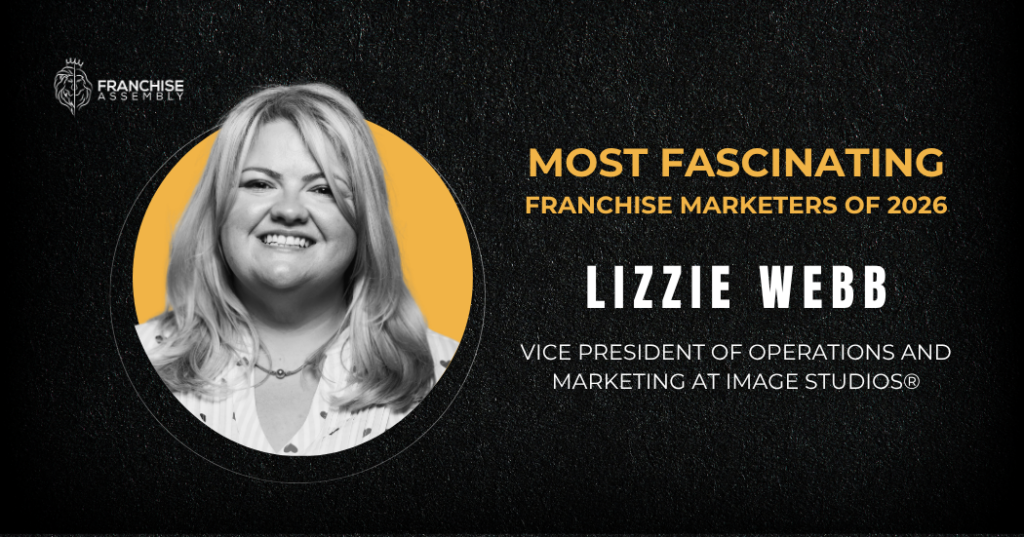
Lizzie Webb
Lizzie Webb’s path into franchising began in a Las Vegas bar, which is admittedly not where most franchise careers start. That is where she met her now-husband, Mark. After countless transatlantic flights, visa paperwork, and an elopement, Lizzie moved from the United Kingdom to Utah and found herself interviewing with the CEO and COO of IMAGE Studios®.
Lizzie had no experience in franchising or the beauty industry. The day before her final interview, a former political colleague FaceTimed her, gestured vaguely toward her hair and asked, “You intend to do something about…that, right?” Apparently, she did enough. Lizzie got the job, fell in love with franchising and eventually grew into her role as Vice President of Operations and Marketing.
Before making that leap, Lizzie worked in British politics, specializing in political communications and campaigns. Special elections often required her to arrive in a district she barely knew, earn the trust of local campaigners, and quickly understand the community. Those experiences taught her that the people closest to the action usually have the answers. Her job was to listen, find the story, and turn it into action.
That lesson continues to shape how Lizzie approaches franchise marketing. Her first piece of advice is to listen to franchisees more than you talk to them. They are closest to the customers and often recognize what is working, and what is not, before the corporate team does. She also believes their trust should be protected fiercely. It takes far longer to build than it does to lose.
Her final piece of advice is to make mistakes. Try things, accept that some will fail, and pay attention to what those failures teach you. One campaign that captures that philosophy is IMAGE Studios’ “Thankful AF.” It was bold, irreverent, and unmistakably IMAGE, but the creative was grounded in a strong understanding of the brand and its audience. Lizzie loves marketing that makes you just a little nervous before you release it into the world.
Looking ahead, she believes franchise marketing is entering an era defined by authenticity and trust. AI will make it easier to create more content, advertising, and communication, but it will also make people question everything they see. Is the review genuine? Is the image real? Did an actual person say that? Lizzie believes the brands that win will not necessarily be those producing the most content. They will be the ones people believe.
For franchise brands, that means elevating real franchisees, customers, and stories. Lizzie sees franchisees themselves as one of the industry’s most underrated marketing opportunities. They already possess the local relationships, credibility and firsthand experiences that corporate marketing cannot manufacture. Give them strong tools, make it easy for them to share their stories and then give them room to do it.
For someone whose career involves travel, conferences and constant interaction, Lizzie is a self-described nerd and secret homebody. Her ideal evening includes her husband, something good to eat, a fantasy novel or a video game. She once spent an unreasonable amount of time searching for a moose in Red Dead Redemption 2. When she needs her brain to stop thinking strategically, she turns to Love Is Blind UK, 90 Day Fiancé or nearly any reality show featuring people making questionable romantic decisions.
The person who shaped Lizzie most was her mum, whom she describes as a “boss woman” before the phrase became popular. She was strong, ambitious, capable, and usually the first person in the room to laugh. She taught Lizzie PMA, or positive mental attitude, along with the importance of choosing happiness, finding the fun, and “having a party in every room.” Lizzie lost her far too young, but her influence remains present in how Lizzie leads, loves people, and approaches life.
Lizzie is also proudly British and, as of recently, proudly American. Becoming a US citizen was unexpectedly emotional. America gave her a husband, a career, close friendships, and a life she genuinely loves, while her British identity remains an essential part of who she is. She is grateful that she does not have to choose between the two, although she maintains that British chocolate is superior and Americans still cannot make a proper cup of tea.
Ultimately, Lizzie wants to be known as someone people loved working with and did their best work alongside. She hopes to build great teams, support bold ideas, and help franchisees create businesses that genuinely change their lives. If she can accomplish all of that while having plenty of fun and remaining the first person to laugh, she will consider it a life and career well spent.
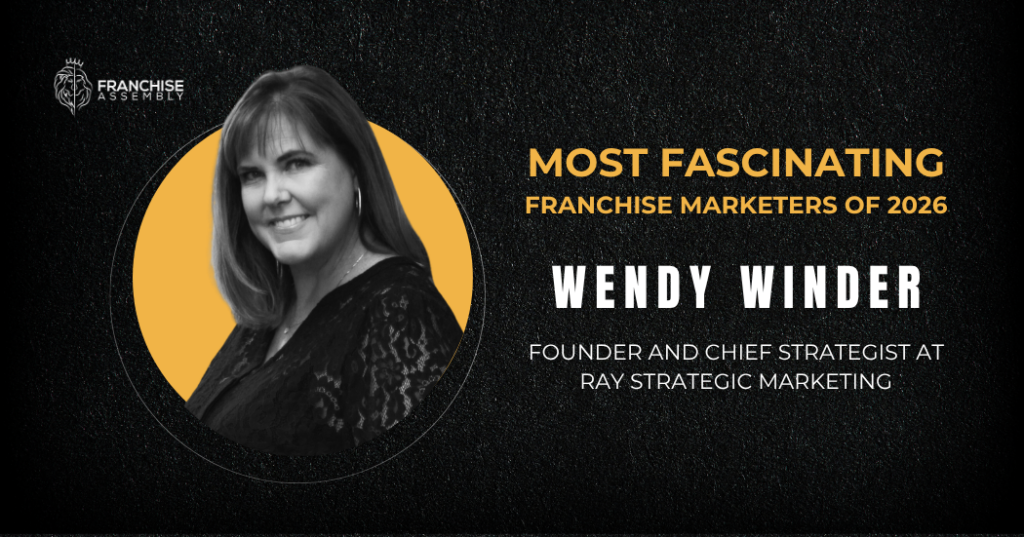
Wendy Winder
Wendy Winder’s career has been shaped by one deceptively simple question: “What’s the big win here?”
That question dates back to her first job as a territory manager in the packaged goods industry. Six months into the role, Wendy’s boss sat her down and told her that her sales needed to improve. It was a wake-up call that made her more action-oriented and taught her to enter every situation looking for the most meaningful result, not merely the safest one.
Wendy went on to spend 25 years leading marketing teams, including roles with four different franchise companies, before founding Ray Strategic Marketing, where she serves as Founder and Chief Strategist. She also spent meaningful time working in sales, an experience she believes every marketer should have. Seeing the business from that side gave her a clearer understanding of the realities customers and sales teams face, and it ultimately made her a stronger marketer.
Of all the challenges Wendy has taken on, brand repositioning remains her favorite. She enjoys helping a company understand who it used to be, make substantive changes and then reintroduce itself to the market. Changing public perception is difficult, but Wendy finds it deeply rewarding when a brand does the work and sees that effort translate into growth and long-term relevance.
Her advice to emerging franchise marketers is straightforward: never stop learning. The landscape is moving too quickly to rely on what worked before. Wendy believes the people who make an effort to understand change, rather than simply react to it, are the ones who eventually lead it.
That mindset is increasingly important as customer attention becomes more fragmented. Audiences face constant noise with few real breaks, so brands must stay focused on solving genuine problems instead of producing more content for the sake of being visible. Wendy expects in-house marketing capabilities to continue growing, but she does not believe efficiency will eliminate the need for smart marketers. Tools cannot replace the work of building something worth discussing and telling its story well.
Wendy sees one of the most overlooked opportunities sitting inside a brand’s existing customer base. Customer feedback contains valuable insight into why people chose a company, how they feel about it and what problem the brand truly solves for them. Businesses now have more ways to collect, analyze and apply that information, yet many still fail to use it effectively.
Her work with AI gives her a particularly informed view of where marketing is heading. More than three years ago, Atomic Elevator invited Wendy to provide feedback as it developed Ella, its marketing AI platform. She has helped shape the tool since its inception, taking her much deeper into AI technology than she ever expected to go.
What excites Wendy is not the prospect of replacing marketers, but the opportunity to make them better. She believes AI can help democratize access to strong marketing practices, particularly within franchise systems. By connecting information in one place, the technology can help franchisors and franchisees think more clearly, work more efficiently and tell stronger stories.
Two influences continue to guide Wendy’s approach. The first is that early sales lesson to pursue the big win instead of the safe one. The second is Jim Collins’ Good to Great, a book whose ideas immediately made sense to her and still shape her thinking decades later.
Outside of work, Wendy has spent more than 15 years immersed in hockey as the parent of a child pursuing something he loves. Somewhere along the way, she became a genuine fan herself, including the kind who keeps watching when no one else is in the room. When she needs something lighter, she turns to a wholesome episode of Ted Lasso, which reliably leaves her laughing and feeling a little more hopeful.
One more thing you should know before meeting Wendy: she is taller than her photos suggest. Apparently, she hears that often enough to consider it part of her biography.
In ten years, Wendy hopes to be known for helping companies make big, bold moves. She wants her work to have propelled brands into their next stage of growth or helped them remain relevant for years to come. It all returns to the question that has guided her from the beginning: What is the big win, and what will it take to achieve it?
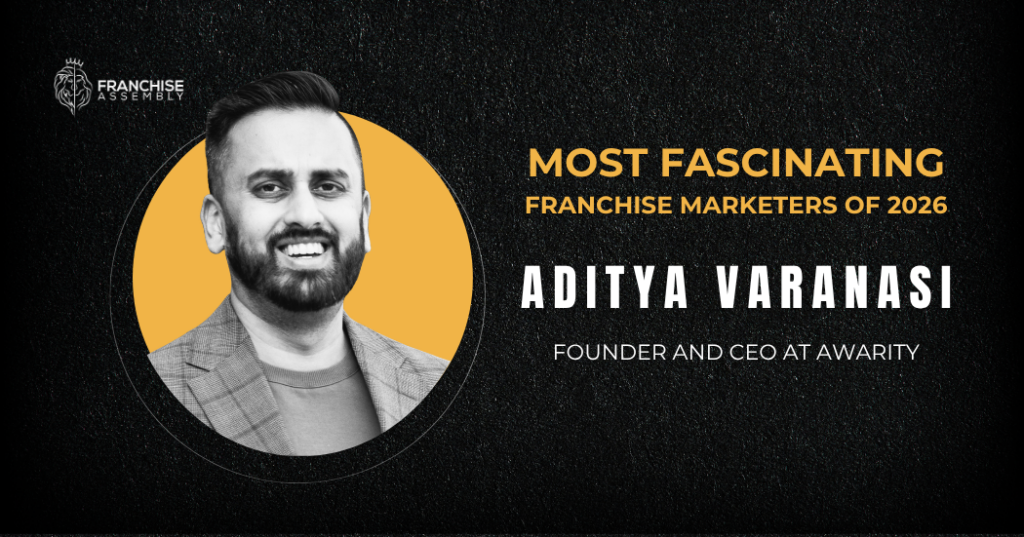
Aditya Varanasi
Aditya Varanasi did not follow a traditional path into marketing. He earned a degree in Chemical Engineering from Purdue University and began his career as an R&D engineer at PepsiCo, where his job included developing new snack foods. Working alongside PepsiCo’s brand teams introduced him to marketing as the intersection of consumer behavior, business strategy, competition, finance, and operations. He was fascinated by both its complexity and its limitless possibilities.
That discovery led Aditya to pursue an MBA in Marketing and Strategy before moving into brand management at PepsiCo. There, he learned from some of the industry’s leading marketers while working with household names such as Cheetos and Cracker Jack.
His career continued to evolve when investor Mohnish Pabrai recruited him to lead a private equity-backed startup. The role gave Aditya valuable lessons in entrepreneurship, but it also exposed a significant problem. Nearly every advertising idea he wanted to pursue was too expensive, and he could not find an agency equipped to work within a small business budget.
That experience inspired Aditya to found Awarity with a clear mission: make world-class advertising accessible to everyone. The company began by serving small businesses across the country and soon found a natural fit with franchise brands. Awarity’s growth has since earned the company a place on the Inc. 5000 list for four consecutive years.
Aditya’s varied career helps explain the way he has built the company. Engineering taught him how to develop scalable systems. PepsiCo taught him advertising and brand strategy. Running a startup gave him firsthand experience with the challenges business owners face. Later, leading marketing for Capital One Auto Refinance deepened his understanding of data modeling and architecture. Each chapter contributed something different to the business leader and marketer he is today.
His advice to franchise marketers brings all of that complexity back to something fundamentally human: “Remember, a conversion is a person.” That person recognized something valuable in a brand and followed an individual path to reach it. Aditya encourages marketers to look beyond the number or acquisition cost and understand the journey behind the decision.
One project that expanded his own view of what is possible involved developing a way to localize television commercials at scale. His team created franchisee-specific local TV campaigns for an entire system, overcoming technical and operational challenges they had not previously encountered. The results opened new possibilities for bringing sophisticated advertising to local markets.
Aditya believes the franchisee is what makes franchise marketing uniquely challenging. Unlike traditional brand marketing, every strategy must account for an additional stakeholder who is managing marketing alongside many other responsibilities. He expects new advertising technology to shift the industry away from broad DMA or state-level targeting and toward campaigns tailored to the needs of individual franchisees and their communities.
The same combination of creativity and technical problem-solving appears in Aditya’s life outside work. He played classical violin in the Purdue Orchestra and, at one point, could play roughly a dozen instruments. His current obsession is Formula 1, a sport that appeals equally to the engineer, business strategist, and global traveler in him.
Aditya is fascinated by everything from the sport’s business model to the aerodynamic details of a rear wing, engine optimization, and energy management. He also loves that each race offers a window into a different part of the world, from the streets of Monaco and Melbourne to the forests of Belgium and the English countryside. His children have become fans as well, and the family now competes using a racing simulator at home.
When asked what has shaped his thinking most, Aditya points not to a single mentor but to the range of people he has encountered throughout his career. Engineers, food scientists, data scientists, brand marketers and colleagues with entirely different backgrounds have each taught him something and influenced the way he leads.
In ten years, Aditya hopes to be known for helping small businesses succeed by democratizing access to world-class advertising. When he is not pursuing that mission, he makes room for Formula 1, video games, music, Ted Lasso, Lioness, prayer and meditation. It is a fitting mix for someone whose life and career have always balanced analysis, creativity, ambition and reflection.
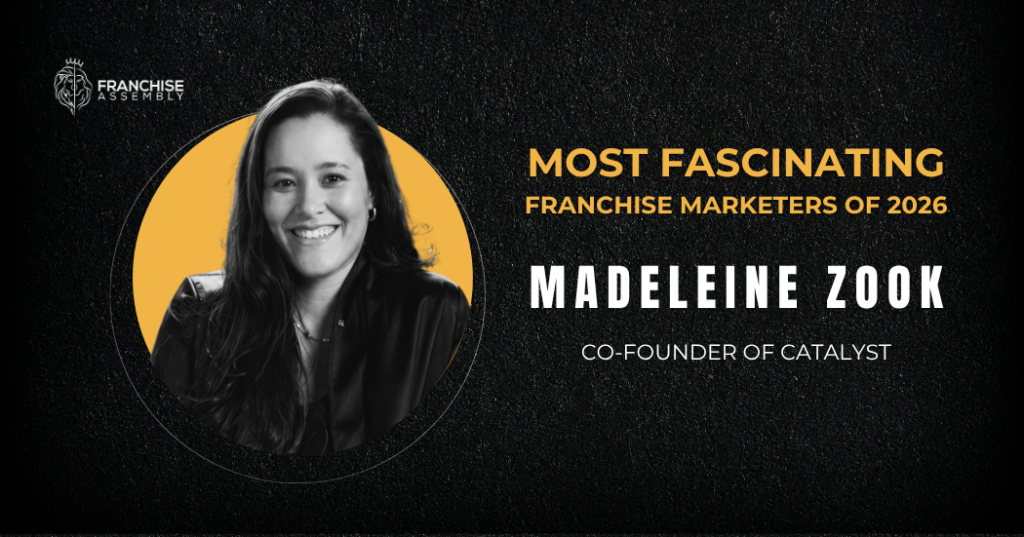
Madeleine Zook
After college, Madeleine “Maddi” Zook found herself choosing between continuing her semi-professional basketball career overseas and accepting a franchise development marketing role with MaidPro. She chose the job, and that decision changed nearly every part of her life.
Maddi spent almost a decade helping MaidPro grow into what is now the Threshold family of brands. Along the way, she met her husband, started a family, and became a multi-brand, multi-unit franchise owner within the same system where her career began. MaidPro founder Mark Kushinsky also became a mentor and close friend, eventually speaking at Maddi’s wedding and remaining an important part of her family’s life.
“What started as a decision between basketball and a job became my introduction to franchising, my career, my family, my business and a community that has shaped so much of who I am today.”
Before franchising, Maddi balanced athletics with work as an executive assistant in a marketing department. The two experiences taught her complementary lessons. Marketing gave her a behind-the-scenes understanding of how brands, businesses, and leadership teams operate. Basketball taught her that passion alone is never enough. Success also requires preparation, discipline, resilience, and trust in the people around you.
Franchising became the perfect intersection of those worlds. It is competitive, team-oriented, and constantly evolving, with people working together toward a shared goal. Maddi may have traded the basketball court for the boardroom, but her approach remains familiar: show up prepared, work hard, trust your team, and never confuse success with being finished.
Today, Maddi is Co-Founder of Catalyst, a strategic growth and marketing advisory firm serving the franchise industry. She is also a Certified Franchise Executive, a multi-brand franchise owner, an advisor and C-suite executive to multiple franchisors, and a supplier to the industry. That gives her a rare view of franchising from almost every side of the table.
Her advice to franchise marketers is to learn the business, not just the marketing. The strongest marketers understand unit-level economics, operations, franchisee relationships, and what happens after the phone rings. She encourages people to stay curious, become comfortable with discomfort, and spend time with those closest to the customer. Technology and platforms will change, but listening, solving problems, and building trust will always matter.
One of Maddi’s most challenging projects involved a youth sports franchise without traditional brick-and-mortar locations. Its franchisees rented local fields and facilities, many of which restricted the marketing tactics her team would normally recommend. Online, the keywords they needed were dominated by major brands such as Nike, making conventional search strategies expensive and ineffective.
The constraints forced Maddi and her team to examine the entire customer journey, from discovery and website experience to CRM nurturing and registration. They then worked market by market to understand what each franchisee could do, where they could do it, and which alternatives were available. The result was a collection of “if this, then that” playbooks built around the realities of each community.
The experience reinforced two of Maddi’s strongest beliefs. Constraints can make you a better marketer, and franchisee strategy must be built with owners rather than for them. Solving the problem together ultimately strengthened trust, transparency, communication, and culture across the system.
Maddi believes franchise marketing is now entering a fundamental shift. Search, discovery, education, comparison, and conversion are beginning to blend within AI-powered experiences, making the customer journey less linear and traditional attribution less reliable. She expects advertising within AI platforms to become a foundational part of digital marketing, much as paid search did decades ago.
For franchise brands, the question will no longer be limited to “Where did this lead come from?” Instead, marketers will need to ask where and how their brand earned enough visibility, credibility and trust to become the answer. Brands that build digital authority, balance brand and demand, and become comfortable with imperfect attribution will be better prepared for what comes next.
Maddi sees different opportunities from each seat she occupies. For franchisors, she believes national advertising funds can create scale through connected TV and other broad-reach campaigns that individual locations could never achieve alone. National dollars should not simply duplicate local spending. They should build awareness, support underfunded markets, and amplify strong franchisee investment.
For suppliers, her advice is to do the homework before attempting the sale. Learn how decisions are made, who pays, what adoption looks like and whether the product can succeed across hundreds of independently owned businesses. A tool that works for one corporate location may struggle across a system with different markets, budgets, and levels of sophistication. Suppliers who understand that distinction can move beyond selling features and demonstrate that they understand the actual problem.
For franchise owners, Maddi sees an opportunity to accelerate local trust. Community marketing still depends on relationships, but owners can invest in memorable experiences that help those relationships form more quickly. Meaningful charitable partnerships, thoughtful gestures for teachers or first responders, and collaborations with beloved local businesses can create a stronger response than simply placing a logo on a banner. The goal is to help people feel, “I know them. I like them. I want to do business with them.”
Maddi’s commitment to community also led her to create the FranGirlGang. What began as a group chat for women she knew and loved in franchising, complete with bedazzled jean jackets, became an enduring network of friendship and support. Years later, the chat remains active with career victories, difficult days, industry stories, and the everyday moments that make relationships real. It reminds Maddi that franchising is ultimately about much more than data, growth targets and deliverables. It is about people.
Outside work, Maddi’s interests are difficult to overlook. After living in Salem, Massachusetts, for a decade, she developed a serious commitment to Halloween. Her collection now fills roughly 25 boxes, and her annual party draws between 100 and 150 guests. The festivities have included multiple piñatas, a giant outdoor movie screen, and an 11-foot charcuterie board served on a skeleton.
Then there are the hermit crabs. When her children brought two home from a beach shop, Maddi researched how to care for them properly and discovered that they are surprisingly demanding. That research produced a two-tier, 80-gallon habitat with four heating pads and carefully controlled humidity, now prominently displayed in the family’s sunroom. The crabs subsequently buried themselves to molt and disappeared for months, leaving Maddi to maintain what may be the most luxurious vacant property in the house.
Ultimately, Maddi hopes to be known as someone who made franchising stronger and left every brand, system, and person better than she found them. She wants her impact to be measured not only by what she helped build, but also by what continued growing because she was there: stronger businesses, better franchise systems, more thoughtful leaders and people empowered to take bigger chances. More than any title, she wants her legacy to reflect that she moved franchising forward without losing sight of the people who make it worth building.

KEEP LEARNING FROM FRANCHISE ASSEMBLY

