

Show & Tell: People Don’t Want Your Content. They Want The Answer.
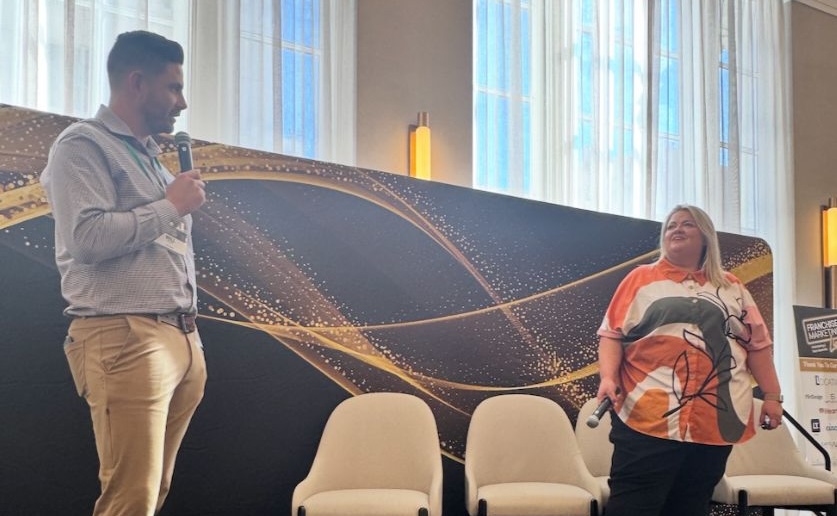
This is a guest blog post by Will Fraker, Founder of AGNTMKT, a company that creates AI agents and lead nurture systems for franchise brands.
Someone opened a chat on a franchise website late at night and typed: “How much does a suite cost? Zip 76132.” That was it. No hello, no “tell me about the brand,” no clicking through five pages to figure out how the business works. A question and a zip code.
I spend a lot of time reading conversations like that one. Since April 2025, the AI agents we run for franchise brands have handled more than 34,000 conversations across 15 brands, roughly 73,000 messages from visitors. The more of them I read, the more obvious something becomes. People don’t really want your content. They want the answer that’s buried somewhere inside it.
People are direct when you let them ask
The median message a visitor sends is 23 characters. Not words. Characters. Nearly half of all conversations, about 48%, start on a weekend or outside 8 am to 6 pm. And the questions themselves are plain:
“Do you move the furniture in a room you’re carpeting?”
“Are you accepting walk-ins this afternoon at the Haynes Bridge location?”
“Do I need spa or massage experience to own a franchise?”
“Is Tuesday, June 16th available?”
“How much is a 60-minute Swedish massage?”
“What is the average cost and timeline to open?”
“Cost to cover stairs 2 flights and 4 bedrooms”
Our first pass at sorting about 11,000 typed questions found that roughly half were some version of “do you,” “can you,” or “is there.” About 1 in 5 mentioned price. Another 1 in 5 were asking where or when: closest location, hours, availability today. And roughly 1 in 8 came from existing customers trying to sort out a membership, a gift card, or a billing question.
Those buckets overlap, so I wouldn’t call it a perfect taxonomy, but the pattern doesn’t need one. These aren’t people looking for content. They have one question, they typed it the way they’d say it out loud, and they want it answered now.
Now they’re asking ChatGPT the same question
This behavior isn’t limited to the chat box on your website. The same person might ask Google, ChatGPT, Perplexity, or the agent on your site. Same person, same intent, different box. And every one of those systems has to get the answer from somewhere, which usually means whatever you’ve published: your website, your location pages, your franchise development pages, reviews, third-party articles, Reddit, a competitor’s comparison post.
So if someone asks “How much does it cost to open one?” and your site says “Contact us for more information,” that isn’t an answer. The AI either tells the person the information isn’t available or pieces together a number from someone else’s page. Neither one is good for you.
I don’t think the takeaway is “SEO is dead.” It’s that the unit of content is changing. It used to be the page. More and more, it’s the answer. And one good answer now works in several places at once: Google can use it, ChatGPT can use it, and so can the agent on your own site. That’s a good return on one piece of information.
Specific people buy. Vague people browse.
There’s a second pattern in the data that I find in our work at AGNTMKT that’s even more useful. Specificity looks a lot like buying intent.
On one flooring franchise’s site, conversations that mentioned something specific, like a pet, waterproofing, a staircase, or a particular room, booked an in-home consultation at 8% to 11%. The overall booking rate from chat was 2.8%. The “Schedule” button on that same site got tapped 385 times and produced 10 bookings. Typed questions produced 80% of them.
That makes sense when you look at the questions. “What kind of flooring do you sell?” could be anyone at any stage. “Looking to cover tile floors in bathrooms and laundry room with vinyl or waterproof laminate. Trying to avoid the mess of tearing out existing tile. Does your company do anything like this?” is someone with a project, a budget, and a timeline. That person doesn’t need a 1,500-word article about flooring trends. They need a yes, a rough idea of cost, and a way to book.
This is why I think a lot of content strategy is still backwards. We spend most of our time creating broad content for people with broad interest, while the people closest to buying are asking extremely specific questions and getting “contact us.”
So what should you write?
Start with the questions people already ask, not the keywords you hope they search. Read your chat logs. Listen to sales calls. Go through the franchise development inbox. Ask franchisees what they hear at the front desk. Pull the queries from Search Console. Pay attention to what people ask right before they book, call, or fill out a form. Then answer those questions as directly as you can.
If the question is about price, put a number in the answer whenever you can. A range beats “contact us” every time. If the question is yes or no, start with yes or no. When someone asks whether experience is required to become a franchisee, don’t make them read four paragraphs about your training program to find out. “No, industry experience isn’t required.” Then explain why. It sounds obvious. Go look at most franchise websites and count how often we do it.
Franchise brands have one extra problem
The answer also has to survive at the location level. That “Zip 76132” part matters. Hours change, pricing changes, availability changes, promotions definitely change. It isn’t enough for the national site to have the right answer.
The answer has to be right for the market the customer is asking about, and it has to match everywhere they might look: your national site, your local page, your Google Business Profile, your franchisee’s page, and whatever AI agent is answering on your behalf. Customers notice contradictions. So do the AI systems that are deciding which source to trust.
Write for the person asking at 11 pm
That’s probably the simplest test. Picture someone on their couch at 11 pm asking your brand a question. Can they get a useful answer without waiting until tomorrow? If a human does need to get involved, that’s fine. Just tell them what happens next. “A member of our franchise development team will call you within one business day” is an answer. “We’ll be in touch” is not.
Then test your content the same way your customers will. Ask ChatGPT your ten most common questions. Ask Google. Ask your own website. Whatever comes back wrong, vague, or missing is your next content plan.
The answer is the content
We’ve watched people do this tens of thousands of times now. They’re not asking for another blog post. They’re asking: Do you do this? How much is it? Where are you, and when are you open? Can you help with my situation? What happens next? Those are the answers worth publishing.
That’s also where the work we do at AGNTMKT fits in.
We build AI agents for franchise brands that answer those questions directly on the website, help the visitor book an appointment or take the next step, and pass the conversation back to the team along with the lead. But one of the most useful things the agents produce isn’t the lead. It’s the question list. Every question the agent can’t answer tells you something your website probably should, and over time that list starts to look a lot like a content strategy.
If you want to see how we’re using this with franchise brands, you can find us at agntmkt.ai.

KEEP LEARNING FROM FRANCHISE ASSEMBLY

